MS-006 · Product Design
Eco-Lamp
Overview
A wave-activated LED lamp designed and prototyped by a five-person team for Engineering Design & Society. Wave a hand over the base and it lights for a set time, then turns itself off. It is the simplest version of saving energy, aimed at people who want the savings without changing how they live.
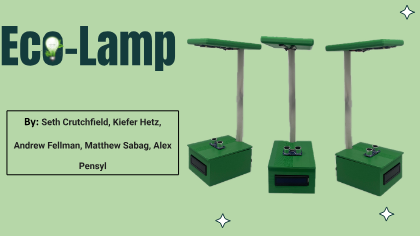
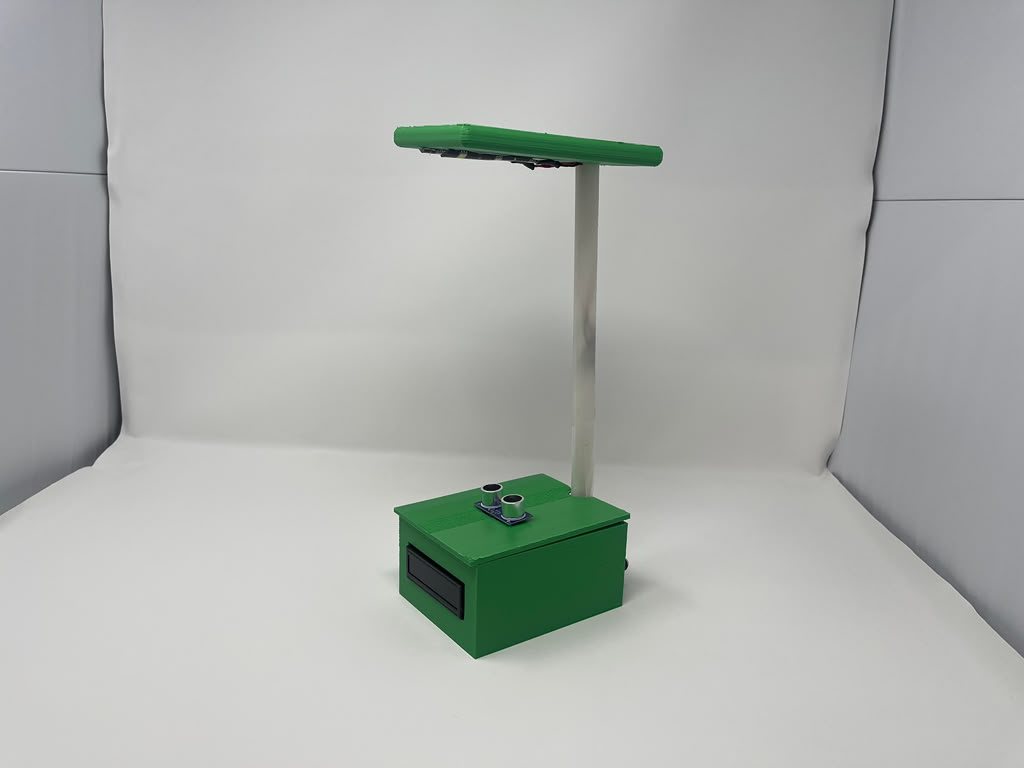 The built prototype
How it was designed and built
Research first, then a weighted decision matrix, then an ultrasonic sensor and a countdown timer in a 3D printed enclosure. It covers who the lamp was aimed at, how the concept was picked, and where the prototype fell short.
Who it's for
We targeted American suburban homeowners aged 25 to 65, and backed that choice with research rather than assuming it. 52% of U.S. neighborhoods are suburban, and saving money, not environmental concern, is the most commonly cited reason people give for saving energy. That reframed the whole project. If the motivation is cost, then the lamp has to be cheap up front, or it never gets bought.
The two human-centered needs we designed against were cost-efficiency and ease of use.
Choosing a concept
Concepts were scored in a weighted decision matrix against six criteria. Cost-efficiency, ease of use, coding and modeling difficulty, effectiveness, environmental impact, and time. Forcing the comparison into a matrix meant the concept we picked was the one that scored best, not the one we liked most.
How it works
You wave a hand over the base and the light comes on for a set run of 10 to 15 minutes, counting down on a small display on the front of the base. Wave again and it resets. When the timer expires the light switches itself off.
That timeout is the whole energy argument. A lamp someone forgets about burns power all evening. A lamp that turns itself off costs nothing to remember, and the countdown on the display is there so the behavior is never a surprise. You can see how long you have before it goes dark, which is the difference between a feature and an annoyance.
The sensor is an ultrasonic range finder sitting in the lid of the base, not a passive infrared motion detector. It measures the distance to whatever is above it, so a deliberate hand wave triggers it and someone simply walking past does not. For a lamp meant to sit on a desk, being triggered on purpose matters more than being triggered easily.
Building it
The circuit was prototyped in TinkerCAD Circuits and the control logic worked out as a flowchart before any code was written. Wave detected, light on, timer running, timer expired, light off. Four parts were modeled and 3D printed. The base, the cover of the base, the stem, and the head. Printing them ourselves kept the cost down and let us iterate on fit between the electronics and the enclosure.
How it turned out
The prototype worked. It functioned as intended, cost very little to build, and 3D printing proved to be the right call for the enclosure.
It also had real limitations, and the report said so. It needed two separate voltage sources rather than running off one supply, which is awkward for a product meant to be easy to use. The enclosure is non-biodegradable plastic, which conflicts with a product sold on environmental grounds. And the sensor was unreliable, and that is the single component the entire concept depends on. Stating those openly was more useful than claiming a clean success.
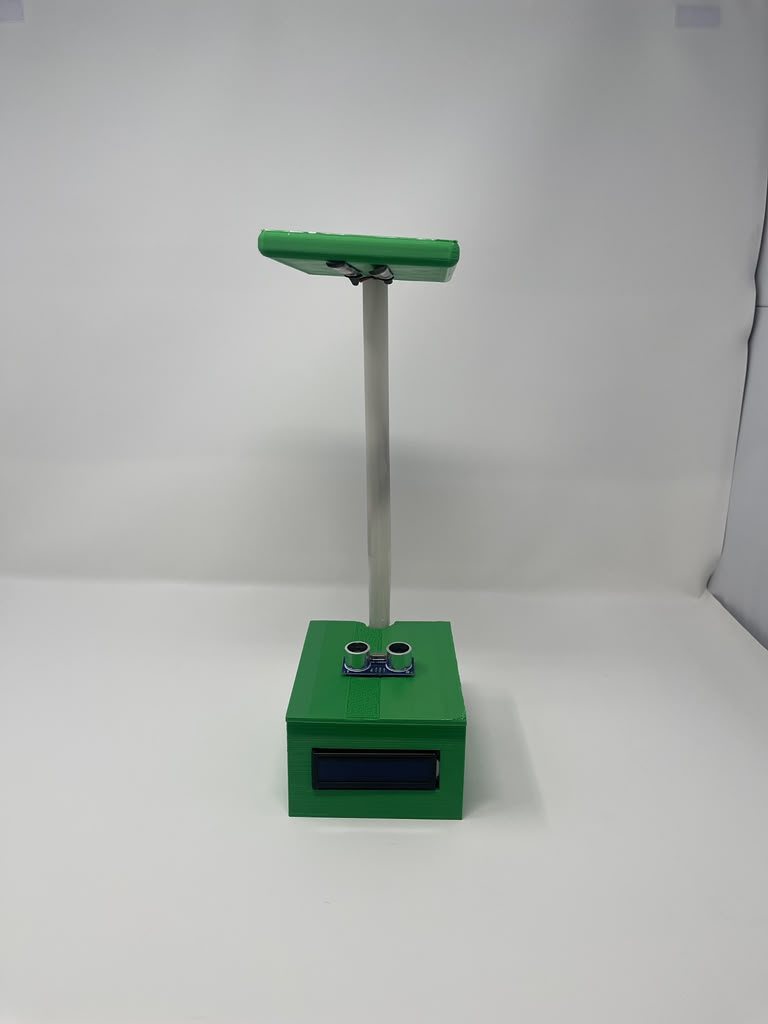
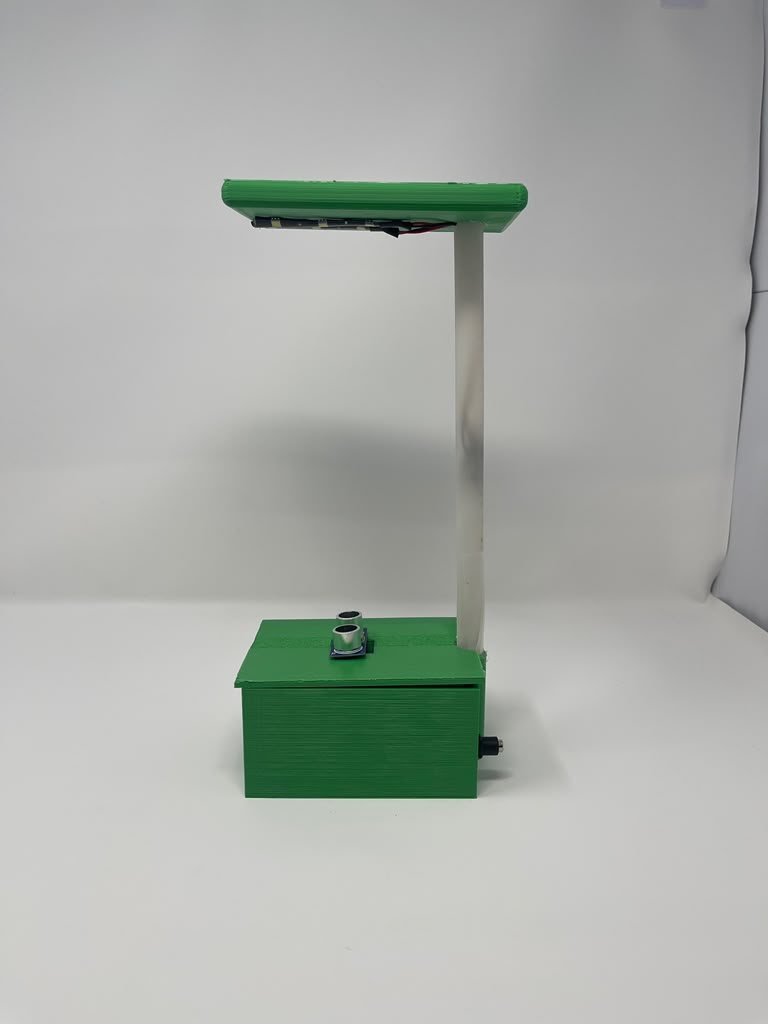
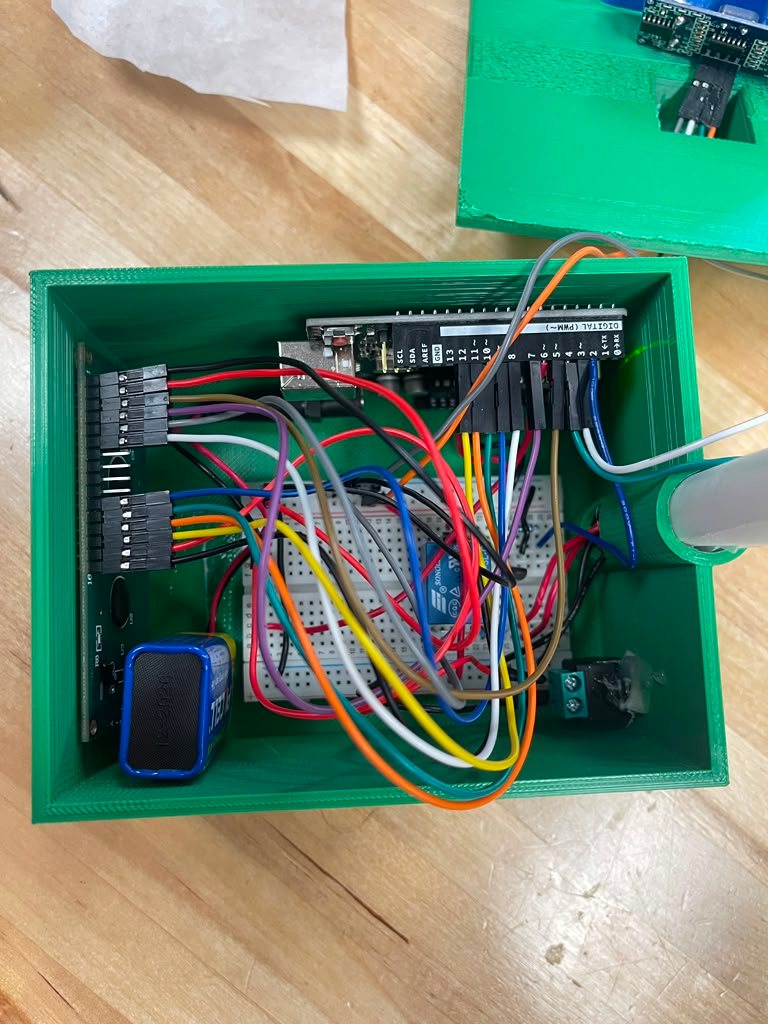
Team demo of the working prototype
More photos & videos of the build Google Drive
What I took away
The lamp worked, cost very little to build, and failed in ways worth naming. The main lesson is that the research came before the hardware. Deciding who it was for, and finding that people save energy to save money rather than to save the planet, is what set the cost target everything else had to meet.